

On 2 June 1916, a sixteen-year-old boy died in a hospital in Grimsby. His mother, travelling from London, did not reach him in time.
His naval career had lasted less than a year. He had spent only a few weeks aboard his ship and would never return home to tell his family about his experiences at sea.
Within months, however, his name would become familiar to schoolchildren across Britain. His portrait hung in classrooms, his story appeared in newspapers and books, and people held his conduct up as an example of courage, obedience, and devotion to duty.
His name was John Travers Cornwell, better known as Jack Cornwell, the 'Boy Hero of Jutland'.
But who was the boy behind the Victoria Cross?
A boy from the East End
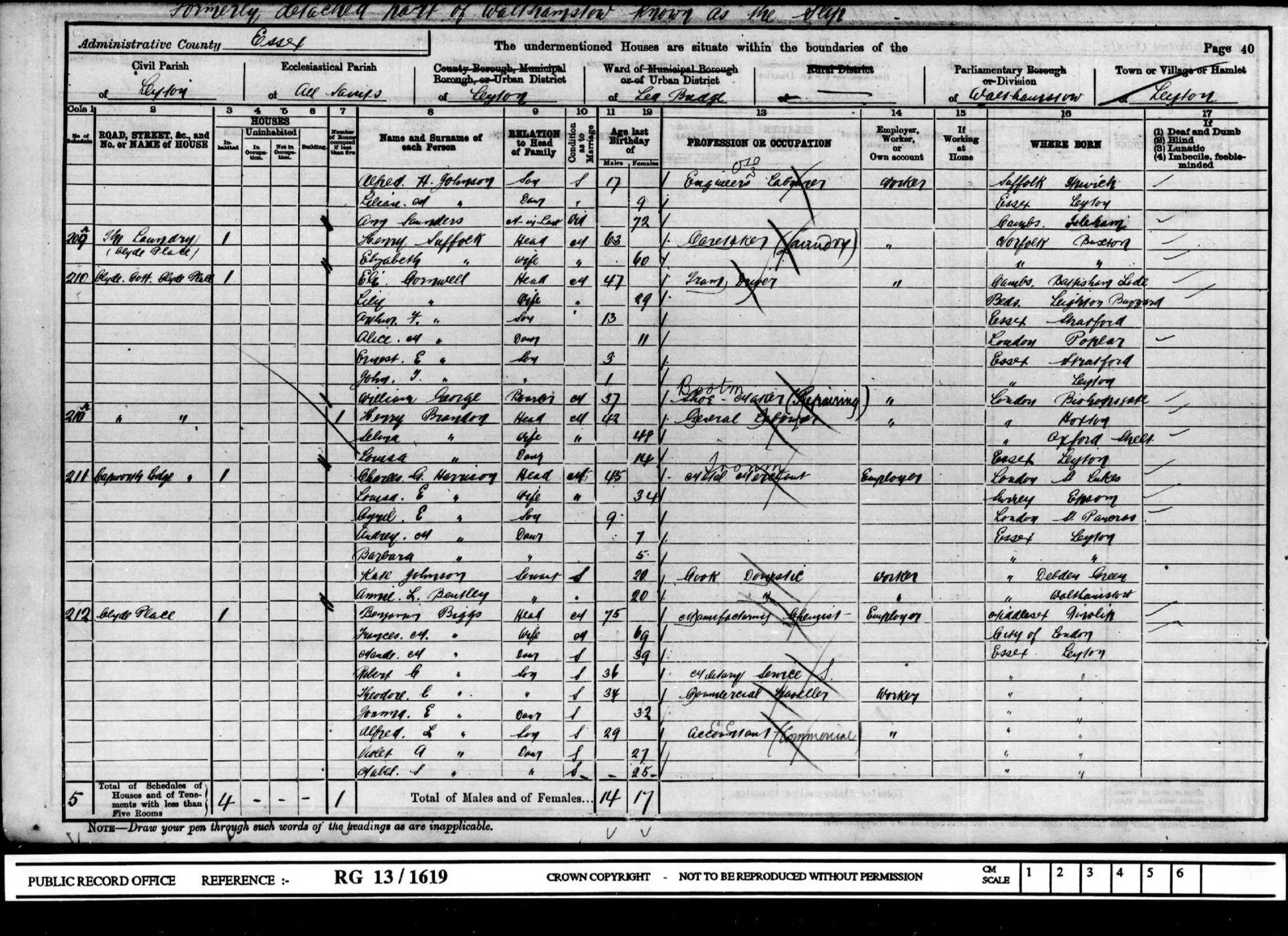
1901 census for England, Wales & Scotland, Findmypast.co.uk
Jack was born on 8 January 1900 in Leyton, then part of Essex, to Eli and Lily Cornwell. His father was a former soldier who worked in various civilian jobs, including as a tram driver.
Jack grew up in a working-class family in the expanding suburbs of east London. He attended Walton Road School and joined the Scouting movement, which emerged in the early twentieth century with an emphasis on independence, citizenship, discipline, and practical skills.
Like many boys of his generation, Jack entered employment at an age when children today would still be attending school. He worked as a delivery boy for a tea merchant before joining the Royal Navy.
The outbreak of the First World War in August 1914 transformed the world Jack was growing up in. Military service became increasingly visible in everyday life, while newspapers, recruitment campaigns and popular literature presented service to one's country as an expression of masculine duty.
For boys approaching adulthood, the boundaries between childhood, employment and military service were considerably different from those we recognise today.
Joining the Royal Navy
In October 1915, aged just fifteen, Jack entered the Royal Navy.
Unlike the British Army, the Royal Navy had a long-established system of recruiting and training boys below the age of eighteen. These boys were an integral part of the service, undergoing instruction in seamanship, discipline, physical training and specialist naval duties.
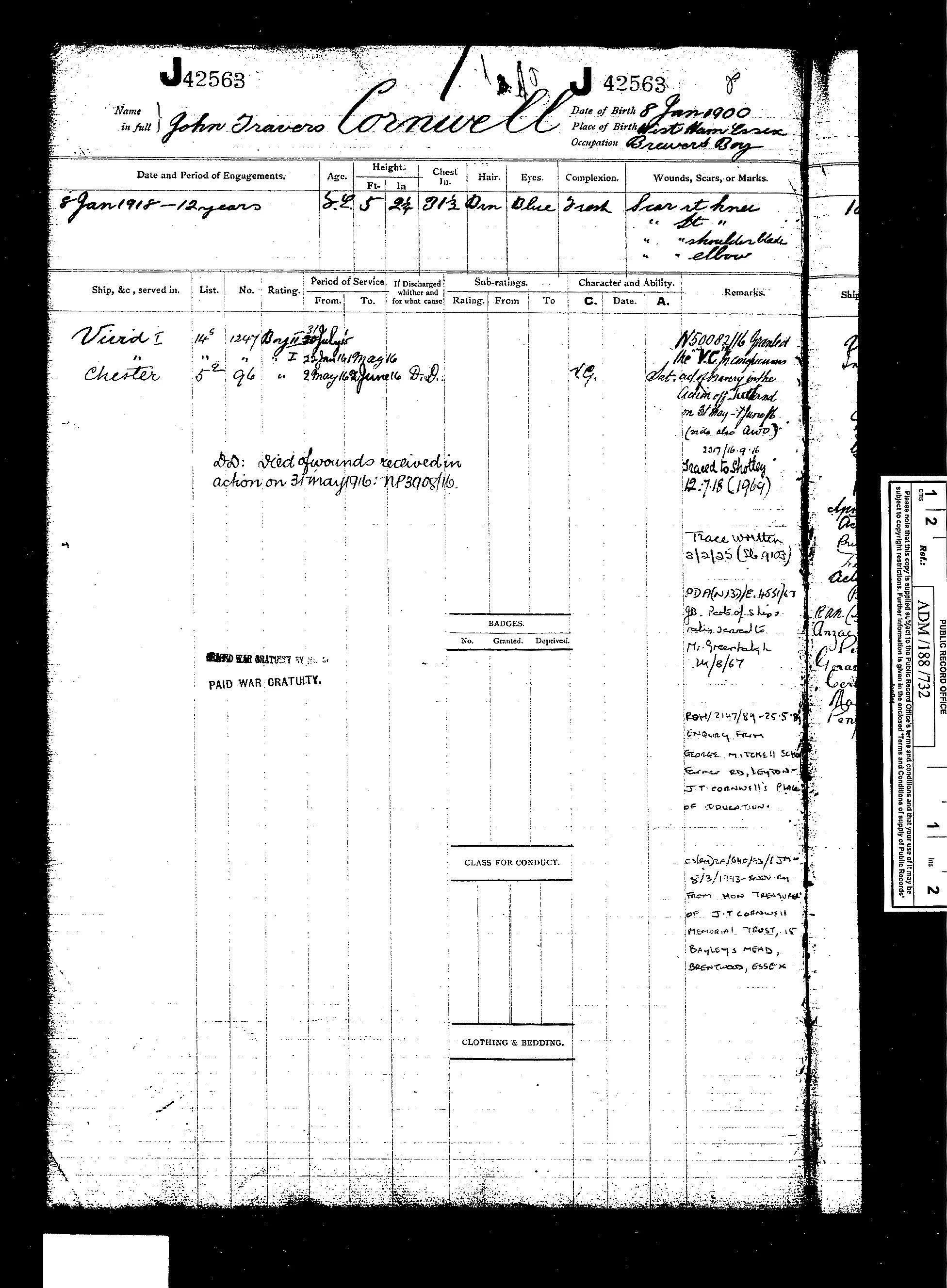
Service record for John Travers Cornwell, Findmypast.co.uk
The Navy offered training, employment, regular wages and opportunities to travel. It also demanded obedience, endurance and an acceptance of considerable personal responsibility.
For Jack, joining the Navy meant leaving behind his family, his familiar surroundings and his civilian occupation. Following a period of training at Devonport, he joined the newly commissioned light cruiser HMS Chester in the spring of 1916.
He held the rating of Boy First Class.
There is something particularly striking about that title. Within the naval hierarchy, Jack was still officially recognised as a boy, yet he was entrusted with duties that carried very real responsibilities within a warship.
The distinction between boyhood and manhood was not necessarily determined by age alone. It was also shaped by conduct, competence and the expectations placed upon young sailors.
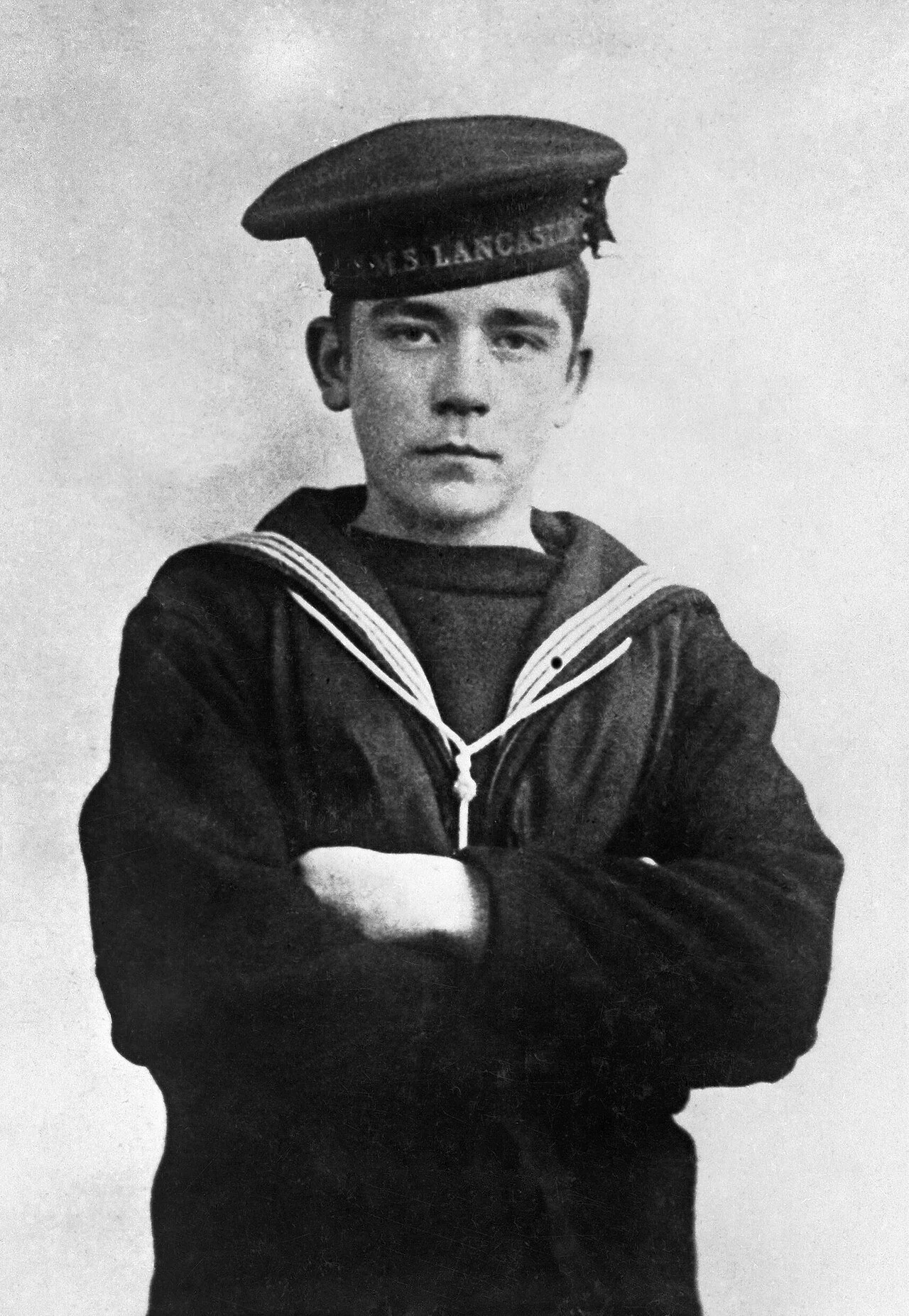
Though described as a photo of Jack, this is actually believed to be his brother, and the photograph was taken after Jack’s death.
The Battle of Jutland
On 31 May 1916, the British Grand Fleet and the German High Seas Fleet met in the North Sea in what would become the largest naval battle of the First World War.
For many of the young sailors serving aboard British warships, Jutland represented their first experience of naval combat.
Jack was among them.
During the fighting, HMS Chester sustained severe damage and suffered considerable casualties. Jack was mortally wounded, but his conduct during the battle was subsequently singled out for recognition by Vice-Admiral Sir David Beatty.
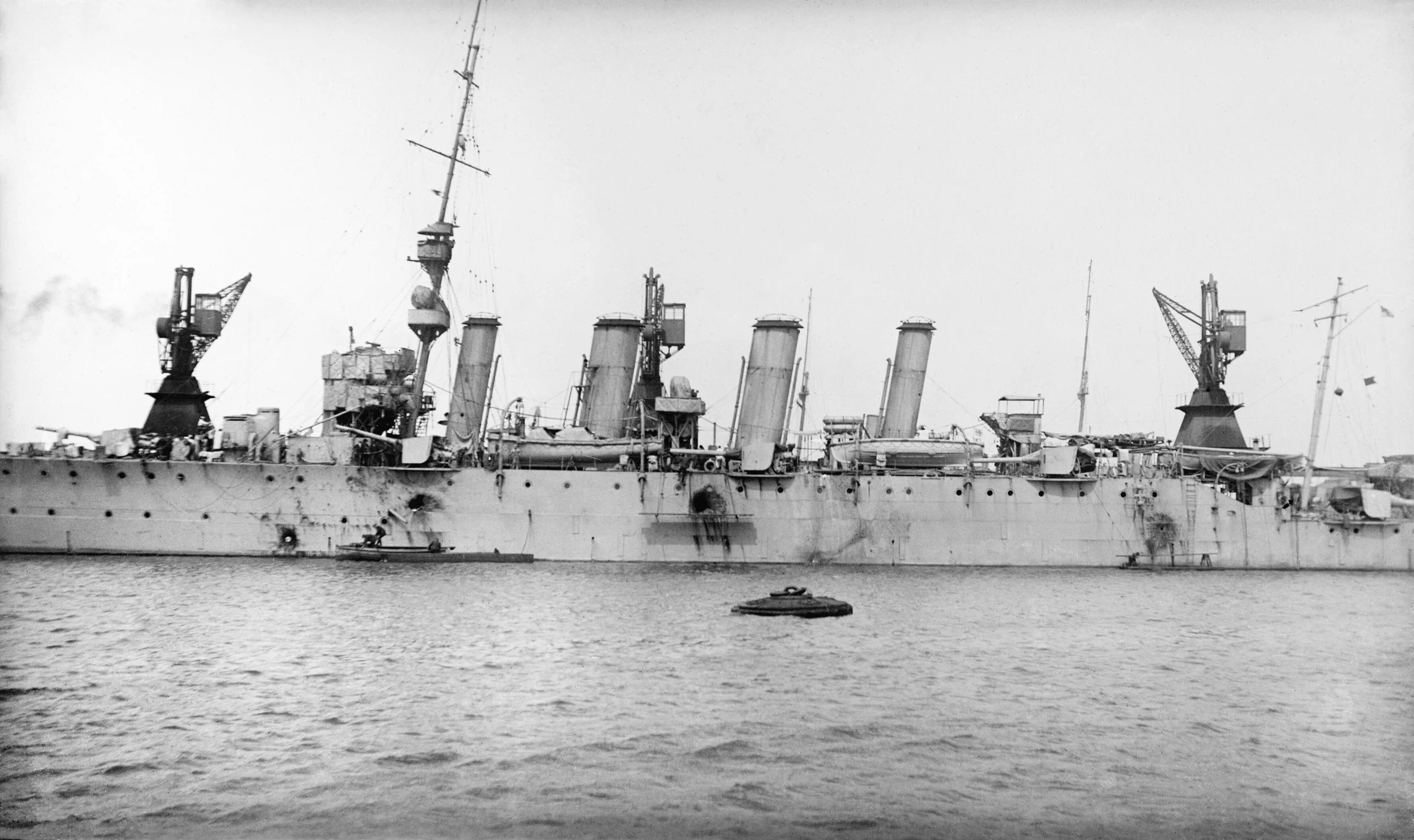
Damaged HMS Chester after the Battle of Jutland
Following the battle, Jack was taken ashore to hospital in Grimsby. His mother was sent for, but he succumbed to his injuries on 2 June.
He was sixteen years old.
While Jack's bravery would subsequently dominate accounts of his life, it is worth remembering the personal tragedy behind the familiar narrative. A family had lost a son and a brother. His mother had been denied the opportunity to see her child before he died.
Before he became a national hero, Jack Cornwell was a boy whose family wanted him home.
From private grief to public remembrance
Jack's body was returned to London and initially buried in a communal grave at Manor Park Cemetery.
When details of his conduct at Jutland became widely known, the press began campaigning for a burial considered more appropriate for a national hero.
On 29 July 1916, Jack was reburied with full naval honours. His funeral procession brought together sailors, schoolboys, Scouts and members of the public.
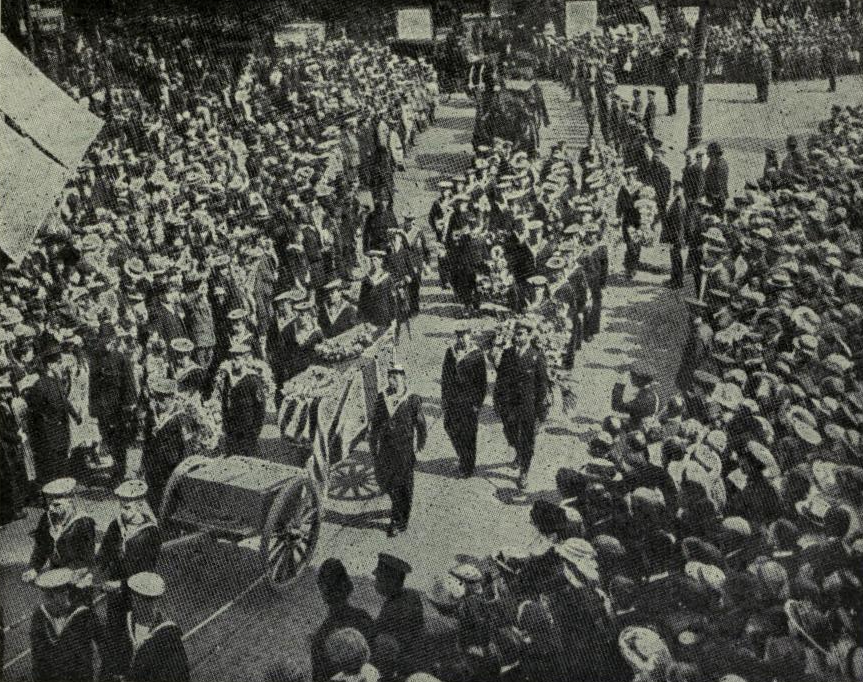
Funeral for Jack
What had begun as a family's private bereavement had become a national event.
In September 1916, Jack was posthumously awarded the Victoria Cross, Britain's highest military decoration for gallantry in the face of the enemy. In November, his mother received the medal from King George V at Buckingham Palace.
Jack's image subsequently appeared on postcards, cigarette cards, posters and in illustrated publications. Portraits were commissioned, memorial funds established and his story circulated throughout Britain's schools.
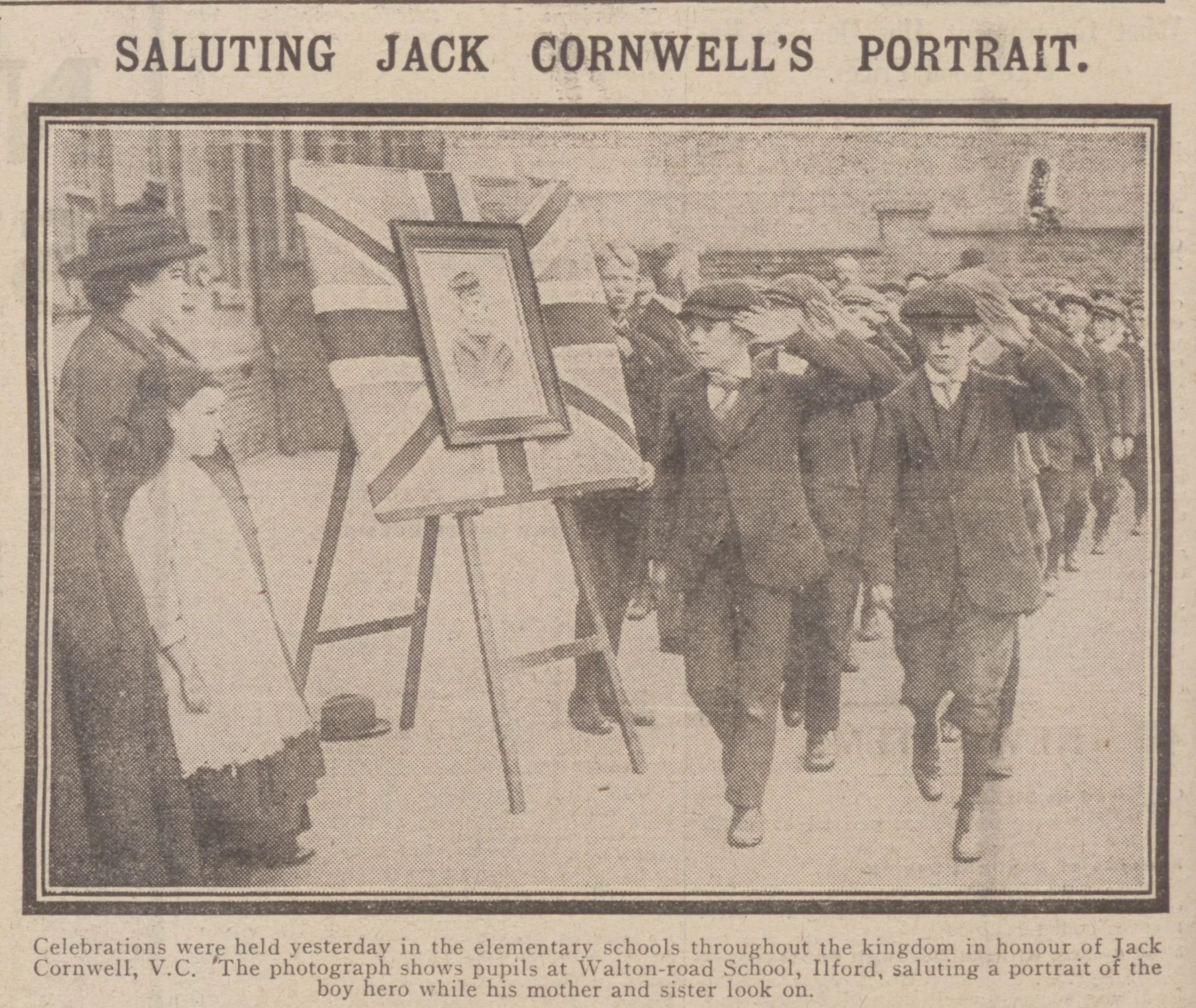
Daily Mirror, September 22 1916, Findmypast.co.uk
The Scouting movement established the Cornwell Badge to recognise courage, character, and endurance among its members.
Within a remarkably short time, Jack Cornwell became one of the most recognisable young faces of Britain's war at sea.
The making of a boy hero
Jack's story emerged at a difficult moment in the First World War.
Although the Royal Navy retained its strategically important command of the North Sea, public expectations of a decisive victory at Jutland had not been met as many had anticipated.
Jack's story offered something more readily understood than the complexities of naval strategy: an individual whose conduct could be presented as an example of courage and self-sacrifice.
His youth was central to that narrative's power.
Here was a working-class boy with neither wealth nor social prominence, whose actions had brought him recognition at the highest levels of British society.
For young readers, Jack represented an ideal of what a boy might aspire to become. Courage, discipline, loyalty, obedience and devotion to duty were qualities repeatedly emphasised in accounts of his life.
The publication of biographies, including a volume issued by Hodder & Stoughton in 1917, helped introduce his story to a generation of children growing up during the war.
Yet these accounts also reveal what was expected of boys.
Jack was celebrated not simply because he was young, but because his conduct was understood to embody qualities associated with idealised British manhood.
His story occupied an uncomfortable space between childhood and adulthood. His youth made his death particularly poignant, while the responsibilities he had undertaken were celebrated as evidence of maturity and masculine character.
Remembering the boy
More than a century after the Battle of Jutland, Jack Cornwell remains an important figure in the Royal Navy's collective memory.
His Victoria Cross survives, as does the gun associated with his service aboard HMS Chester, which the Imperial War Museums have preserved. The Royal Navy, the Scouting movement, and the community in which he grew up continue to remember his name.
But Jack's story is more than the portrait of a decorated naval hero.
He was a schoolboy, a Scout, a delivery boy, a brother, and a son. He belonged to a generation of young people whose transition from childhood to adulthood was profoundly shaped by war.
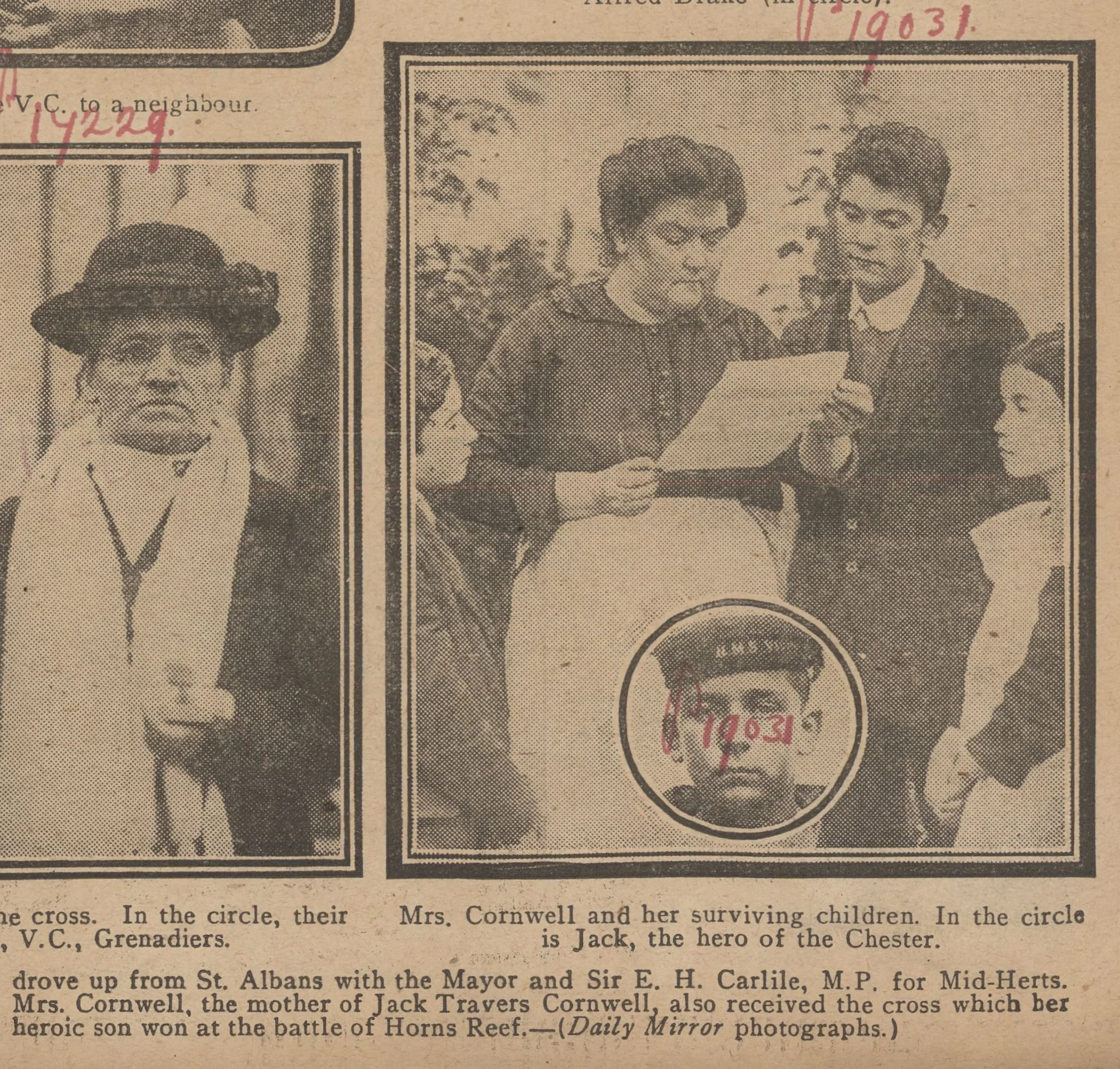
Daily Mirror, 17 November 1916, Findmypast.co.uk
His story raises questions about the experiences of the thousands of other boys who entered naval service during the First World War. What did joining the Navy mean to them? How did they understand the responsibilities placed upon them? How did they navigate the expectations of their families, their contemporaries and the service itself?
Jack's fame has ensured that his name survives, but many of the boys who served alongside him remain largely forgotten.
In remembering Jack Cornwell, perhaps we might also remember them.
And beneath the familiar image of the Boy Hero of Jutland, we might rediscover John Travers Cornwell - a sixteen-year-old boy whose life had barely begun.